In the precision transmission systems of high-end equipment manufacturing, tapered roller bearings play an indispensable role as the "heavy-load foundation." These key components, capable of simultaneously bearing combined radial and axial loads, are widely used in core fields such as automobiles, rail transportation, construction machinery, and wind power. With the rise of the new energy industry and the accelerated localization of high-end equipment, my country's tapered roller bearing industry is undergoing a strategic transformation from scale expansion to technological breakthroughs, aiming to seize a favorable position in the global supply chain restructuring.
Core Characteristics Analysis: Structural Advantages Determine Application Value
The core competitiveness of tapered roller bearings stems from their unique structural design. These bearings consist of an inner ring, an outer ring, tapered rollers, and a cage. Both the inner and outer ring raceways are tapered surfaces matching the roller taper, allowing the load to be evenly distributed along the length of the rollers, significantly improving load-bearing capacity and operational stability. Its working principle is based on rolling friction, which significantly reduces energy loss compared to sliding friction. It also features adjustable clearance—the end clearance or preload can be adjusted by axially moving the inner and outer rings to adapt to different working conditions.
The refined product classification system reflects the industry's technological evolution. Based on contact angle, it can be divided into three categories: small, medium, and large angles, corresponding to radial load-dominant, combined load-balanced, and axial load-dominant application scenarios, respectively. Precision levels follow international ISO standards (P0 to P2), with P5 and above being precision-grade products widely used in high-end applications such as high-speed rail gearboxes and CNC machine tool spindles. Sealing methods include open, single-sided, and double-sided seals. The sealing design directly determines the bearing's dustproof and waterproof performance and lubrication life in harsh environments, which is crucial for fields such as construction machinery and mining equipment.
Market Landscape: Steady Growth in Scale, Accelerated Domestic Substitution
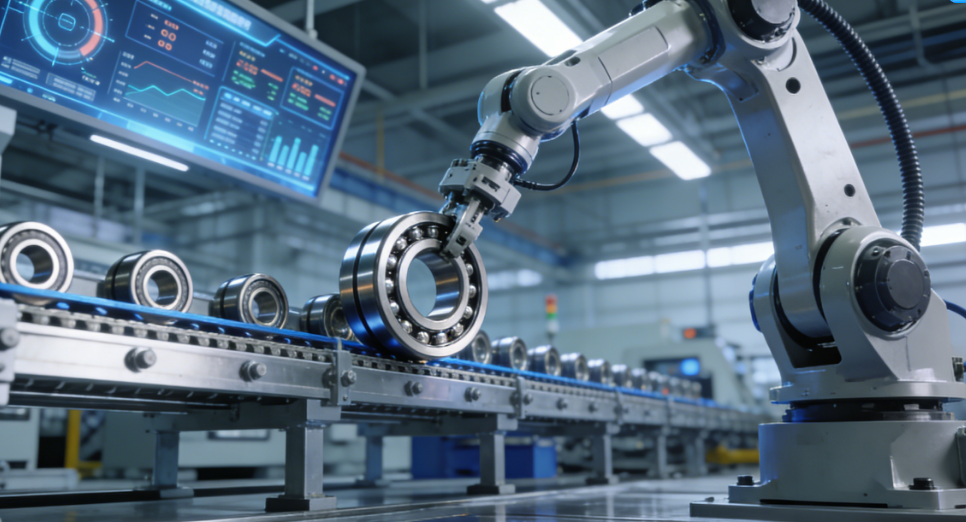
Both the global and domestic markets show steady growth. Data shows that the global tapered roller bearing market reached RMB 84.31 billion in 2025, with the Chinese market exceeding RMB 25 billion. It is projected that by 2032, the global market size will climb to RMB 95.682 billion, maintaining a compound annual growth rate of 1.82%. Specifically, between 2021 and 2025, my country's precision tapered roller bearing market grew from RMB 9.8 billion to RMB 14.2 billion, with a compound annual growth rate of 7.7%. The proportion of high-precision P4/P2 grade products increased from 18% to 26%, demonstrating a significant trend towards high-end products.
The competitive landscape exhibits a "tiered differentiation" characteristic. Internationally, giants such as Japan's NSK, Germany's Schaeffler, and Sweden's SKF dominate the global high-end market due to their technological advantages. Domestically, leading companies such as Wafangdian Bearing Group, Luoyang Bearing Technology, and Renben Group have achieved import substitution breakthroughs in sub-sectors such as new energy vehicles and construction machinery by increasing R&D investment and upgrading intelligent manufacturing production lines, raising the localization rate from 31% in 2020 to 48% in 2025. In terms of regional distribution, the Yangtze River Delta, Pearl River Delta, and Bohai Rim economic zones account for 75% of the production capacity. The Yangtze River Delta, leveraging its precision manufacturing cluster advantage, holds 45% of the capacity, while emerging industrial cities in central and western China are accelerating the improvement of their industrial supporting facilities with policy support.
Application Scenarios Expanding: New Energy and High-End Equipment Become Growth Engines
The automotive industry is the largest downstream application area, accounting for 42.5% of the overall market demand. Bearings are mainly used in wheel hubs, differentials, and transmissions. A mid-to-high-end vehicle typically requires 20 to 30 sets of tapered roller bearings. Notably, the demand for lightweight, low-noise, and long-life bearings in new energy vehicle drive systems has surged, becoming the industry's largest growth driver, with an estimated annual demand growth rate exceeding 12% from 2026 onwards. The extensive use of high-performance bearings in models such as the Tesla Model 3 is driving the industry to accelerate the development of high-temperature, high-speed resistant high-end products.
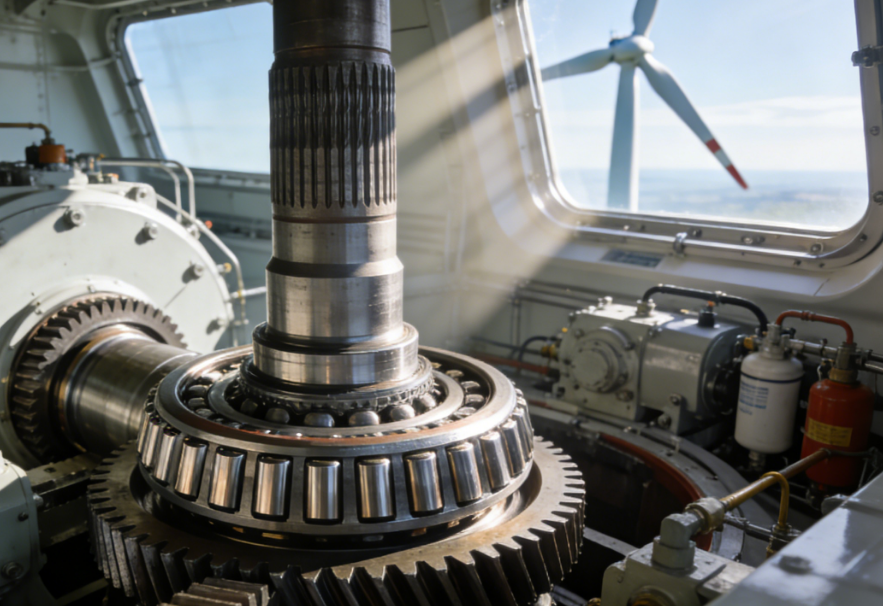
Demand in high-end equipment sectors such as rail transit and wind power is steadily increasing. The rail transit sector accounts for approximately 13.8%, concentrated in high-speed train axle boxes and traction motor support systems. While the wind power industry accounts for only 7.2%, its large single-unit usage (each wind turbine requires 4-8 sets of large precision bearings) and high value make it one of the fastest-growing sub-markets. In 2024, China's newly installed wind power capacity drove a 21.4% year-on-year increase in related bearing procurement. Furthermore, the expansion into emerging fields such as high-end machine tools and aerospace is further driving the evolution of bearing products towards higher reliability and longer lifespan.
Technological Innovation and Industrial Chain Upgrading: Breaking Through Core Bottlenecks
Breakthroughs in core technologies focus on three main directions. In terms of materials, companies such as Baowu Steel and CITIC Special Steel are already able to supply high-purity bearing steel with an oxygen content ≤5ppm in batches, laying the foundation for improved bearing lifespan. The industrialization process of new materials such as ceramic composite rollers is accelerating, and the application rate is expected to increase from 8% in 2025 to 15% by 2030. In terms of technology, core processes such as precision cold rolling, ultra-precision machining of raceways, and deformation suppression during heat treatment are continuously being upgraded. Leading companies have achieved over 60% digital factory coverage, improving production precision and efficiency through online inspection and digital twin technology. Regarding intelligent manufacturing, nano-coating technology, online bearing condition monitoring systems, and AI-driven predictive maintenance have become key R&D focuses. Wafangdian Bearing Group's full lifecycle management system can reduce customer equipment maintenance costs by 18%.
Significant progress has been made in supply chain collaboration and upgrading. The upstream special steel supply system is becoming increasingly complete, achieving basic self-sufficiency and control. Midstream manufacturing is accelerating intelligent transformation, with per capita output value expected to increase from RMB 450,000/year in 2025 to RMB 680,000/year in 2030. Downstream, the demand for domestically produced high-end equipment continues to grow, forming a virtuous cycle of "demand-driven - technological breakthrough - capacity upgrade." At the policy level, policies such as "Made in China 2025" and the "Implementation Plan for Industrial Foundation Reconstruction Project" explicitly support the development of high-end bearings, requiring a domestic production rate of over 70% for high-end bearings by 2027, providing strong policy impetus for industry development.
Future Outlook: High-End, Intelligent, and Green Development Become Mainstream
Looking ahead to 2026-2030, my country's precision tapered roller bearing industry will accelerate its evolution towards higher precision, higher reliability, and intelligent manufacturing. The market size is projected to exceed 21 billion yuan by 2030, with an average annual compound growth rate of approximately 8.2%. Technologically, the mass production capacity of ultra-precision P2-level products will continue to improve, and the localization process for products operating in special conditions (high temperature, vacuum, corrosive environments) will accelerate. In terms of applications, emerging scenarios such as hydrogen energy storage and transportation equipment and high-speed maglev trains will open up new growth opportunities. In terms of the industrial ecosystem, green manufacturing and full life-cycle management will become core corporate strategies, and environmental policies such as the V-level energy efficiency standard will accelerate the elimination of outdated production capacity. The industry concentration ratio (CR10) is expected to increase from 38% in 2023 to 52% in 2030.
With breakthroughs in core technologies by domestic enterprises and the restructuring of the global supply chain, my country's tapered roller bearing industry is expected to achieve a strategic leap from "following" to "keeping pace" and even "leading," providing solid foundational component support for the upgrading of Chinese manufacturing to high-end products.